Glossary about the key terms in the topic Weather Instruments.
Anemometer
Noun
An Anemometer is an instrument that measures wind speed. It is usually made of several small cups attached to a vertical shaft. This is called a cup anemometer. As wind causes the cups and shaft to turn, the speed of turning can be used to calculate wind speed.
Example: The Anemometer is used to measure wind speed.
Barometer
Noun
A Barometer is an instrument used to measure air pressure.
Example: People use the Barometer to measure air pressure.
Cloudy
Adjective
(of the sky or weather) covered with or characterized by clouds.
Example: A very grey, cloudy day.
Partly cloudy
Adjective
(of the sky or weather) partially covered with clouds while having sunshine.
Example: Wednesday will be partly cloudy.
Rain Gauge
Noun
A Rain Gauge is an instrument used by meteorologists to measure precipitation (e.g. rain, snow, hail or sleet) in a certain amount of time. It usually measures in millimetres.
Example: We use the Rain Gauge to measure rainfall.
Rainy
Adjective
(of weather, a period, or an area) having or characterized by considerable rainfall.
Example: A rainy afternoon.
Stormy
Adjective
(of weather) characterized by strong winds and usually rain, thunder, lightning, or snow.
Example: A dark and stormy night.
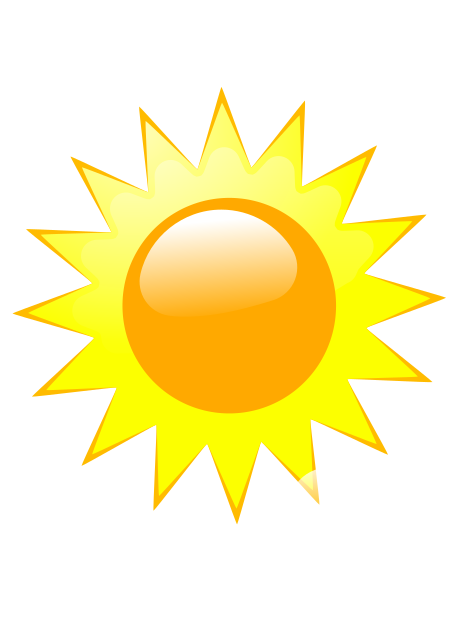
Sunny
Adjective
Bright with sunlight.
Example: It is a sunny day.
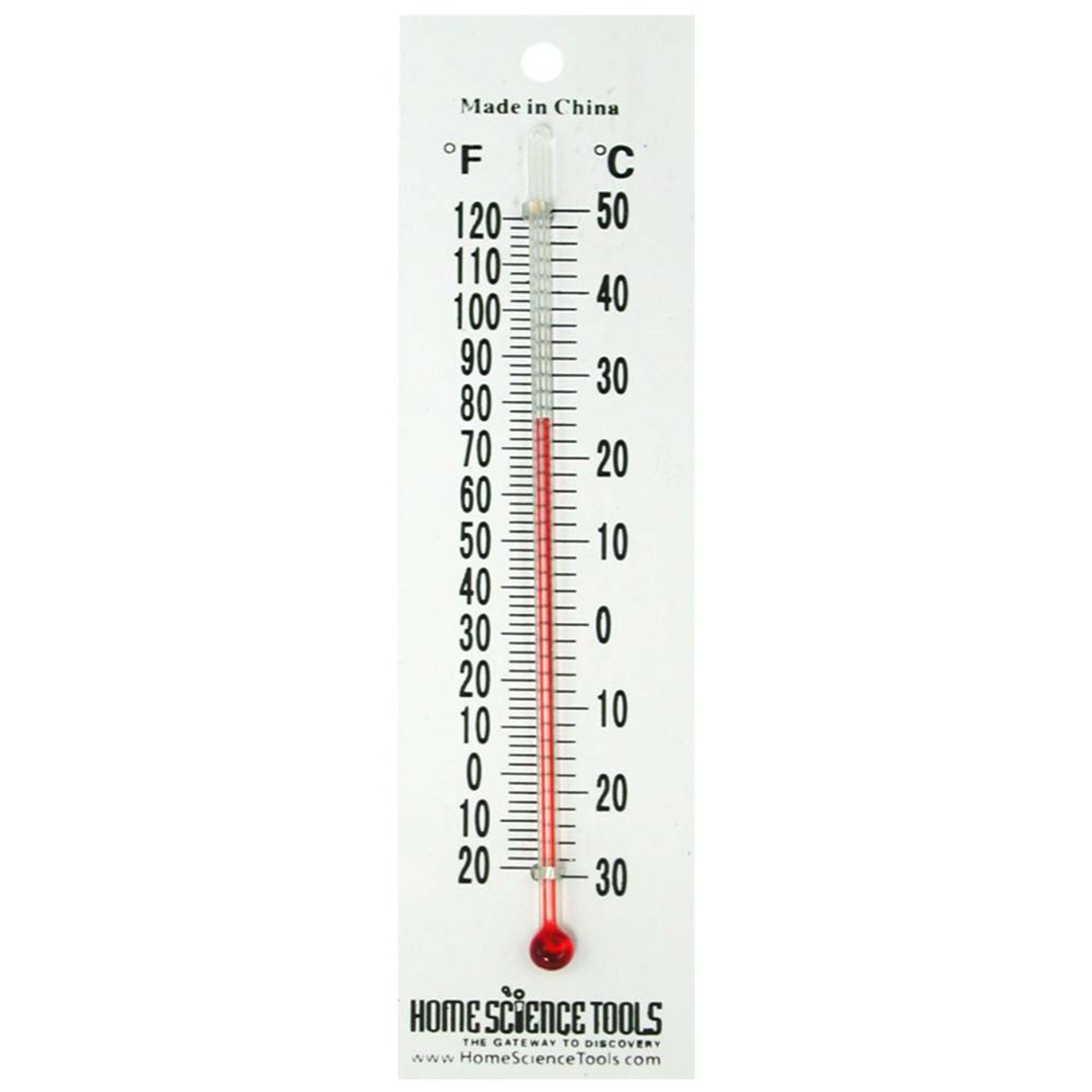
Thermometer
Noun
A Thermometer is an instrument for measuring or showing temperature (how hot or cold something is). One type of thermometer is a narrow, concealed glass tube containing mercury or alcohol which extends along the tube as it expands.
Example: We use a Thermometer to measure temperature.
Wind Vane
Noun
A wind vane, also known as the weather vane, is one of the earliest invented meteorological tools used to show the direction of the wind. It has a pointer that freely rotates on the top of a fixed vertical rod and shows which way the wind is blowing.
Example: The Wind Vane is used to show wind direction.